 The goal of every walk should be a lighthouse. You are less apt to walk in circles when you are walking to a lighthouse. Because of its position in the landscape, a lighthouse naturally invites concentration; its glinting tower is the focal point of the promontory, the cliff, the curving sandspit. Even if you can’t see it ahead of you, it looms at the end of a long line in your imagination — a line you follow, into the bitter wind if necessary, because it takes you home to a notion. For some it is a notion about history, or geography, or architecture, or solitude; for others it’s the notion that, even in the remotest place, someone or something is there to lend itself as a guide to those who are in danger of becoming lost. I’ve been walking to Race Point Light for so many years that it has taken me home to many notions. Lately it has got me thinking about Mr. and Mrs. Osborne Hallett and their 55 cats.
I first heard about the Halletts when I went to Race Point Light one brisk spring morning almost 10 years ago. That was the spring the lighthouse was restored. When I arrived, it was all picked at and hanging open. Workers had been sandblasting and painting the white brick tower and scraping and polishing its iron balcony until the black stanchions gleamed like piano keys. Doors and windows had been removed to make way for new ones; ladders leaned in the sand; the smell of whitewash hung in the stairwell. Up in the glass-paneled lantern room, all of that human industriousness seemed inconsequential next to the landscape that swelled into view: to the south and east, nothing but sand dunes and wind-whipped marshland; to the north and west, all water.
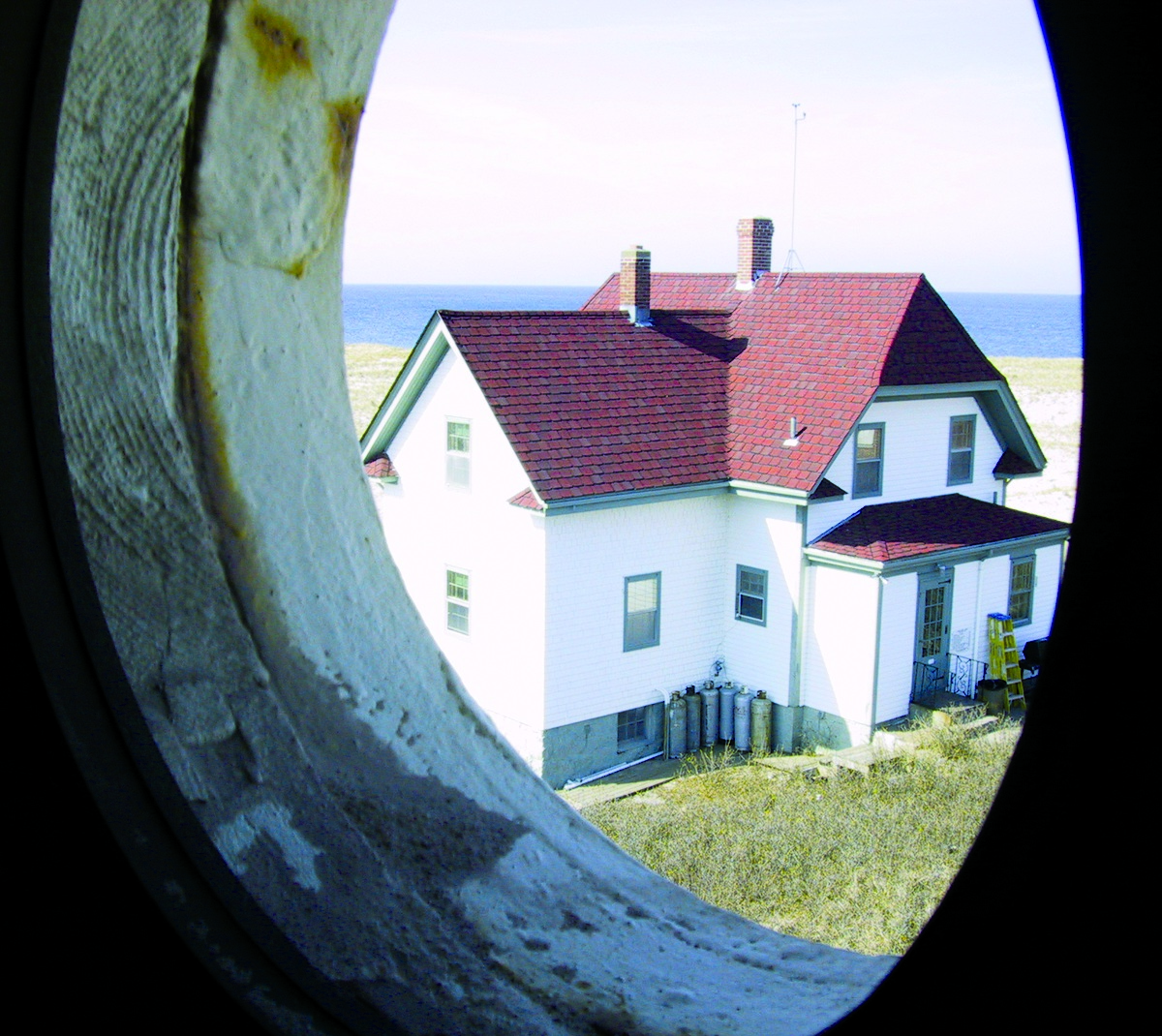
I was there to interview the head of the local chapter of the New England Lighthouse Foundation for a newspaper article about the restoration, and after coming down from the tower I joined him in the kitchen of the keeper’s house, a slant-roofed cottage next door. He and my friend Paul, caretaker of the cottage, and two other members of the lighthouse foundation were sitting around a table talking over coffee and plates of Entenmann’s pastries. It was such a comfortable, civilized scene to be unfolding in that derelict place; it was like stumbling across astronauts having breakfast on the moon. The men began a conversation about the domestic details of the lighthouse keepers’ lives, and that’s when Paul, whose uncle knew everyone in Provincetown, mentioned that the Halletts were the most effective at keeping down the mice and rats.
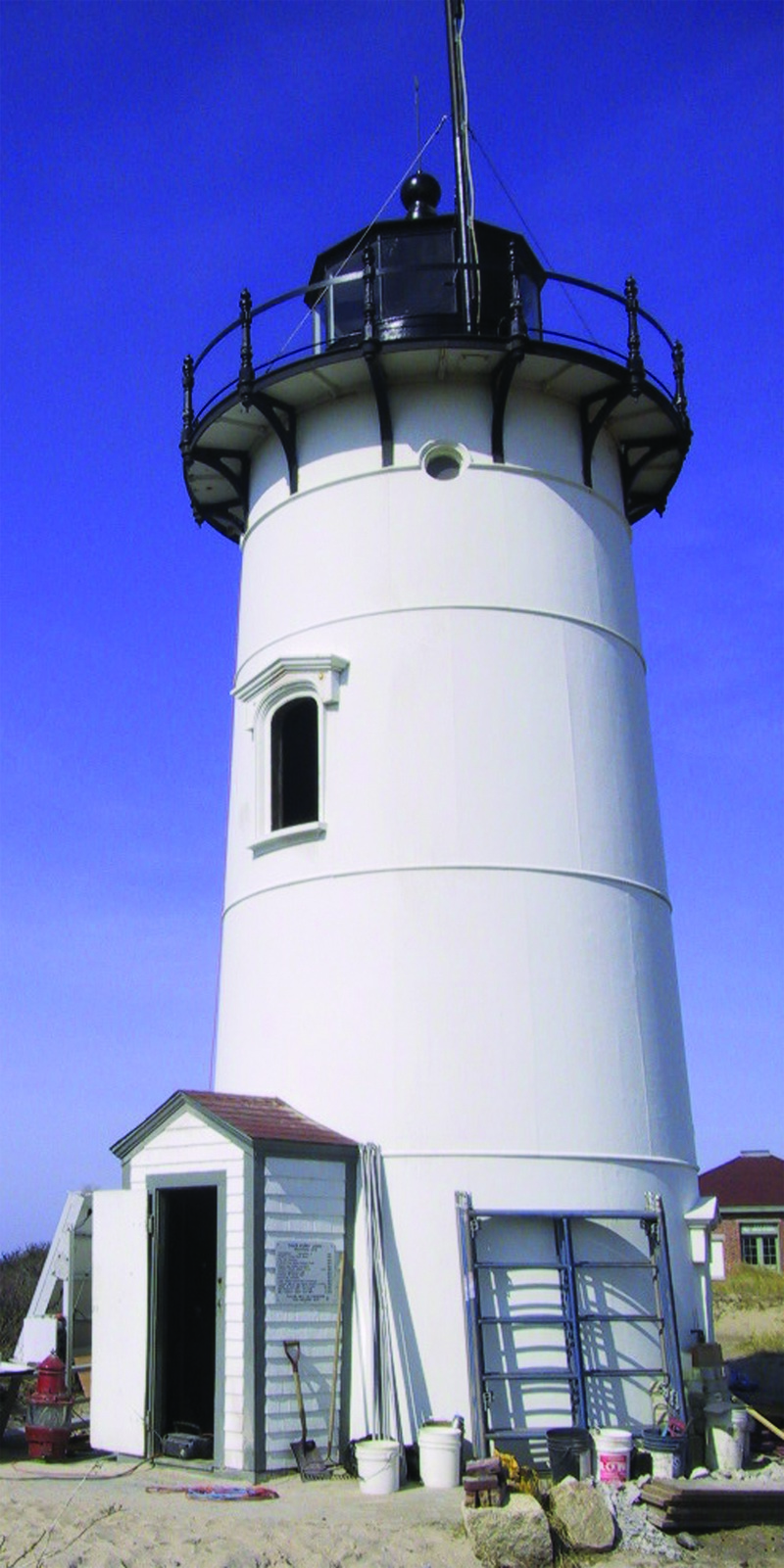 Mr. and Mrs. Osborne Hallett lived at Race Point Light 60 years ago.
“They had cats,” Paul said — 20, 30, maybe more. While their owners polished brass and swept sand off the floors, the cats chased away the rodents. Under their watch, Race Point earned a reputation for being vermin-free, unlike the other lighthouses in Provincetown, he said.
I went ahead and filed my story later that day, but I had to leave the Halletts and their cats out of it. There were too many unanswered questions. How had the cats gotten there? How did they feed them all? It would be impossible to keep that many cats in the house. Did they live in the dunes? Would they go to the beach? What does the ocean look like to a cat? And so on. I have circled back to these questions on my walks to the lighthouse over the years, and I was reminded of them the other day, when my husband told me a story about running into a wharf rat on the West End breakwater when he was young. “How big was it again?” I asked. He held his hands apart as if to indicate the length of a small coffee table. A rat in the Halletts’ neighborhood would never have made it to that size, it occurred to me, and then I started thinking about the Race Point cats again and wondering what had happened to them. This time I decided to investigate further, and on perusing the local library archives I came across this announcement printed in the Advocate in April 1955:
“Mr. and Mrs. Osborne E. Hallett, keepers of Race Point Light for the past 10 years, were faced with a difficult problem when they received word that they were being transferred this week to Nobska Point Light. Mr. Hallett is extremely fond of pets and during the years accumulated a large number of cats … so many that he decided some tramp cat must have put the ‘cat mark’ on his back door. He took excellent care of all that came, buying large quantities of milk and cat food by the case. But he couldn’t take them with him so he put the problem up to Agent Hilliard Hopkins of the North Harwich Animal Rescue League. The agent was assisted by Howard Lewis of Provincetown, who with his beach jeep brought from the Light 55 cats. Mr. Hallett kept a pair of his pets to keep at Nobska.”
Walking to Race Point is like walking to the end of the world. How unexpected it would be to reach the end of the world and find 55 cats waiting for you. If you had to live there, I suppose it would keep life interesting; it would keep it from feeling, in any case, like the end of the world. If I knew what the tramp cat’s mark was, I would put it back on the door.
 The Race Point Rambler
Knowing your husband quite well, I am sure that wharf rat was a fraction of the size he indicated. Surely you have inquired as to the size of many of the stripers he has caught(if you get my drift)
More important than keeping down the vermin, what did the cats do to the birdlife around the Light? Rats and cats and mongoose definitely keep the bird life down around the Diamond Head Light as well as on many of the islets around the Hawaiian Islands. There have been a few I know that have taken on the task of ridding the islets such as Mokolii of vermin to allow the birds some peace during nesting. Alass, there is no way to rid these islets of two legged and two armed vermin. Aloha.